If your Thailand research is built on guides written before 2025, parts of your trip plan are already out of date. Not the beaches — the paperwork. In the last two seasons Thailand has digitised its arrival process, changed the length of its visa-free stamp (twice), moved its busiest national parks onto advance e-tickets, and settled into a strict annual closure calendar for its most famous bay and its best offshore islands.
None of it is complicated once you see it in one place. That's what this guide is for — the first in our Thailand travel series, and the one to read before you book anything else.

1. The paper arrival card is gone — meet the TDAC
The little paper TM6 card that flight attendants used to hand out before landing no longer exists. Since 1 May 2025, every foreign visitor entering Thailand — by air, land or sea — must complete the Thailand Digital Arrival Card (TDAC) online before arrival.
The essentials:
- It's free, and only free. The one official site is tdac.immigration.go.th. Any site charging you a fee to "process" your TDAC is a scam — close the tab.
- File within 3 days (72 hours) before you arrive. The system won't take it earlier, so set a reminder for the week of your flight, not the month before.
- You need: passport details, your flight number, the address of your first accommodation in Thailand, and an email address. It takes about five minutes.
- You get a QR code by email. Save a screenshot. You'll show it at immigration on arrival.
- One per person, one per entry. Children need their own. Leave Thailand for a side trip to Laos or Cambodia and come back? You file a fresh TDAC for the return entry.
- It is not a visa. The TDAC is just the arrival form in digital clothing. Your right to stay comes from your visa or visa-exemption stamp, which is a separate matter — and the next change on this list.
Transit passengers who never pass through immigration don't need one. Everyone else does, whatever passport or visa you hold.
2. The visa-free stamp is 30 days again — check your dates
This is the change most likely to catch readers of older guides. In July 2024 Thailand generously extended its visa exemption to 60 days for citizens of 93 countries, and a flood of "two months visa-free!" articles followed. That era is over.
Following a Cabinet decision in July 2026 and regulations published in the Royal Gazette on 31 August 2026, the exemption was cut back to 30 days, effective 15 September 2026, and the eligible-country list was trimmed from 93 to around 60 nationalities. Travellers who entered on or before 14 September 2026 kept their 60-day stamp; everyone arriving for the 2026–27 season should plan on 30 days.
What that means in practice:
- Most holidays still fit. A two- or three-week trip on a US, UK, EU, Canadian or Australian passport (among others) remains a simple stamp on arrival — just a shorter stamp than the 2024–26 guides describe.
- You can extend once, in-country. A further 30 days is available at a Thai immigration office for a fee of ฿1,900 — build in half a day and the paperwork.
- Staying longer than that? Get a visa first. The standard Tourist Visa (applied for through Thailand's e-Visa system) allows up to 60 days per entry, and remote workers should look at the Destination Thailand Visa rather than stretching tourist stamps.
- Land-border entries are capped. Visa-exempt arrivals overland are now limited to two per calendar year (a few neighbouring nationalities are exempt from the cap) — the old border-run rhythm is specifically what the new rules target.
- Check your own nationality before you fly. The lists changed; don't rely on a blog's country table — including ours. The Thai Ministry of Foreign Affairs consular site is the final word.
Two things officers can still ask for at the desk, as before: proof of onward travel and proof of funds. Have both reachable on your phone.
3. National parks: e-tickets and real fees
Thailand's Department of National Parks (DNP) has been moving its popular parks onto the DNP e-ticket system (the QueQ app and the DNP website) — and for the 2026–27 season, assuming you can just pay cash at every gate is the mistake to avoid.
- Similan and Surin Islands: e-ticket is mandatory. Since the 2025–26 season, every visitor needs an advance e-ticket tied to a passport number. Tickets are non-transferable and non-refundable, and same-day sales close early in the morning. Most tour operators handle this for you — which is why they now ask for your passport details at booking, not at the pier. It's not a scam; it's the system.
- Other parks: mixed. At Khao Yai, for example, you can buy via the QueQ app or still pay officials at the gate. But in peak weeks the e-ticket is the difference between walking in and joining the queue, and more parks move to e-ticket-first every season.
- Fees for foreign adults (at time of writing — always re-check):
- Khao Yai National Park: ฿400 (child ฿200), plus a small vehicle fee
- Hat Noppharat Thara–Mu Ko Phi Phi (including Maya Bay): ฿400 (child ฿200)
- Mu Ko Similan: ฿500 (child ฿250), plus a ฿200/day supplement for scuba divers
- Khao Sok: ฿300 (child ฿150)
- Tickets are short-lived. A Khao Yai ticket, for instance, covers entry and exit on a single day unless you're staying in park accommodation or camping — multi-day park trips need a little planning, not one ticket bought on day one.
- The sunscreen rule is real. Since August 2021, sunscreens containing oxybenzone, octinoxate, 4-MBC or butylparaben are banned in Thai national parks, with fines on paper of up to ฿100,000. Pack a reef-safe brand for park days and nobody will look twice.

4. The closure calendar: Maya Bay and the Similans
Two of Thailand's headline sights now run on a fixed annual rhythm, and both are open for the 2026–27 season as this is published — but plan the wrong month and they're simply not there.
Maya Bay (Phi Phi Leh) closes every year from 1 August to 30 September to let the bay, its reef and its blacktip reef shark nursery rest through the monsoon. It reopened on 1 October 2026 — during the 2026 closure survey, park researchers counted up to 278 adult blacktips near the beach, the highest figure of the year, which tells you the rest is working. When you visit, the post-2022 rules apply: boats land at the pier in Loh Samah Bay on the island's far side and you walk across on a boardwalk; visitor numbers on the sand are capped (around 375–385 at a time, roughly an hour per visit); and swimming is not allowed — wading to about knee depth is the deal. It is a place you now visit to look at, and honestly, it has never looked better.
The Similan and Surin Islands close for the whole Andaman monsoon: 16 May to 14 October, reopening 15 October. The Similans reopened on 15 October 2026 with 1,409 visitors on day one — this is Thailand's best snorkelling and diving by day boat from Khao Lak (or a long day from Phuket), and there is no visiting outside the season at any price: operators cannot legally run. There are also no overnight stays on the Similan islands themselves (closed since 2018); liveaboard dive boats are the multi-day option. Phi Phi, by contrast, is a year-round destination outside the Maya Bay window itself — timing is about which specific sight you want.
Rule of thumb for the whole Andaman coast: if your trip is built around offshore islands, mid-October to mid-May is the season, and November to April is the sweet spot.
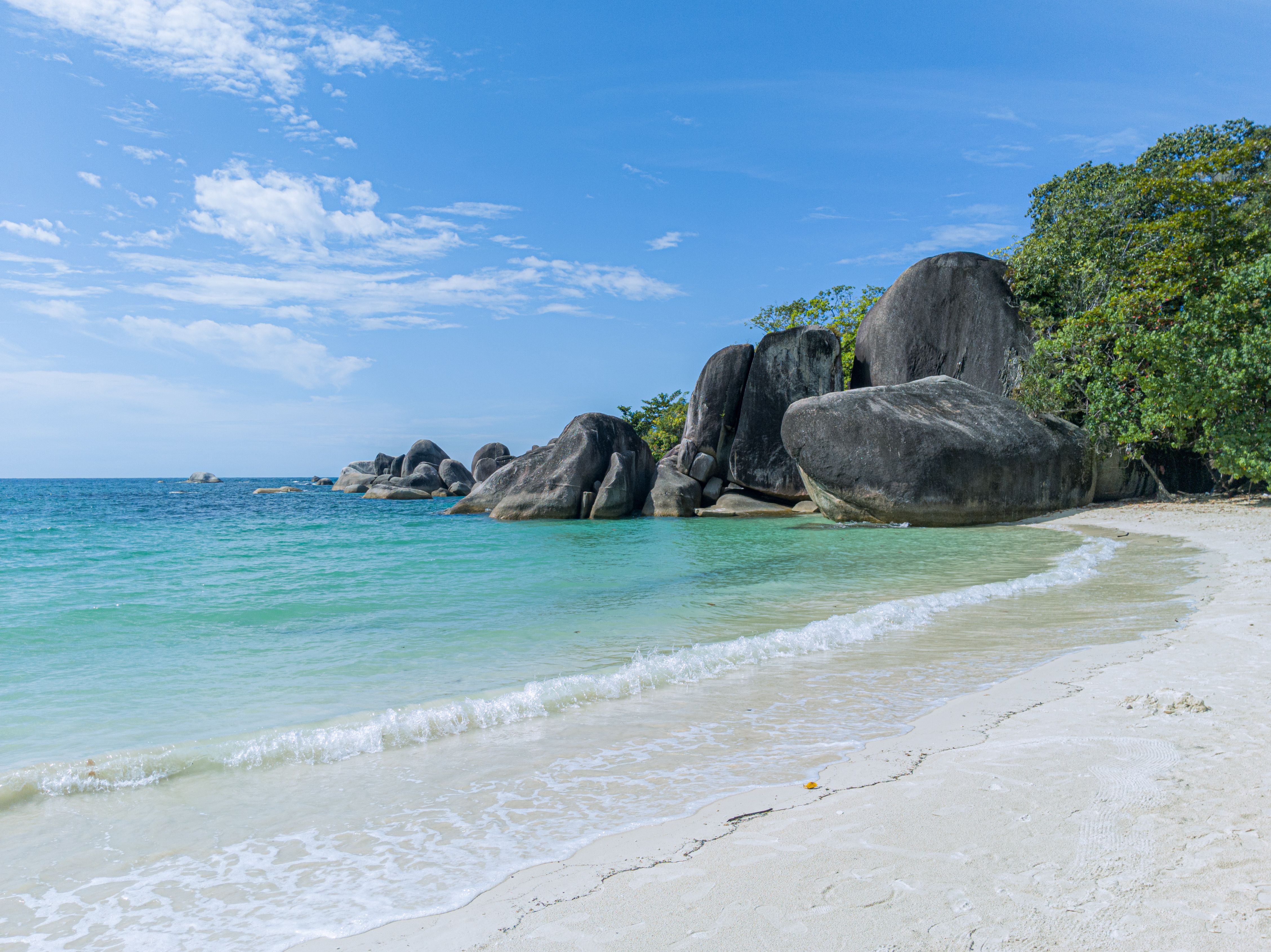
5. Seasons, in one honest paragraph each
Andaman coast (Phuket, Krabi, Phi Phi, Khao Lak): dry and calm from November to April; the southwest monsoon from May to October brings rough crossings, red-flag beach days and the park closures above. This is Phuket's coast — our daily coverage lives here.
Gulf coast (Koh Samui, Koh Phangan, Koh Tao): runs on the opposite clock — driest from roughly February to September, with its wettest weeks usually in October to December. It's the classic answer to "where in Thailand is dry in August?"
Bangkok and the centre: hot year-round; November to February is the comfortable window, March to May is genuinely hot, and the rains build from June to October without ever closing the city down.
The north (Chiang Mai, Chiang Rai): November to February is cool and lovely; be aware of the February-to-April burning season, when field burning can haze the valleys — the one seasonal caveat northern itineraries must respect.
Before you book: the 2026–27 checklist
- Passport valid, and your nationality's current visa-exemption status checked on an official source.
- Trip length matched to a 30-day stamp (or a visa arranged in advance).
- TDAC reminder set for 72 hours before arrival — official site only, it's free.
- Island dates checked against the closure calendar: Maya Bay shut Aug–Sep; Similans/Surin shut mid-May to mid-Oct.
- Park e-tickets understood — Similans need passport details in advance; let your operator handle it, but give them the details when asked.
- Reef-safe sunscreen packed; onward-ticket and funds proof on your phone.
Do those six things and Thailand in 2026–27 is exactly as easy as it ever was — the welcome is unchanged, it's just the forms that grew up.
Sources: Thai Immigration Bureau TDAC guidance via Bangkok Airways' TDAC guide; Ministry of Foreign Affairs visa-exemption changes (Royal Gazette, 31 Aug 2026) as summarised at thaiembassy.com; Department of National Parks fee schedule and e-ticket rules via the Similan park guide and Khao Yai National Park's official visitor site; Maya Bay reopening reports (1 Oct 2026) and Similan season reopening reports (15 Oct 2026), Tourism Authority of Thailand via Wochenblitz/ad-hoc-news. Rules and fees checked 28 October 2026 — re-verify before travel, as Thai entry policy has changed twice in two years.


0 Comments